
Business must become an agent of positive change in attitudes toward women in the military
10.07.2025
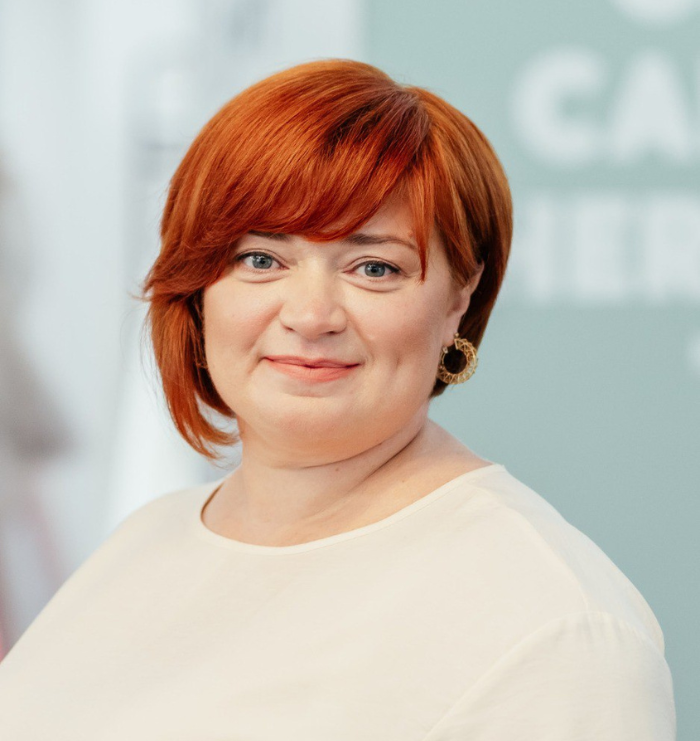
Oleksandra Hnatyuk, Head of PR at EVA and EVA.UA
Three years into the full-scale war, Ukrainian society has undergone major transformations. One of the most significant, though often overlooked, is the increasing presence of women in the Armed Forces. As of 2025, over 70,000 women are serving — a 20% increase compared to 2022. More than 5,500 women are directly on the front lines. Behind each one is a personal story — and also the story of a new Ukraine that is learning to recognize, support, and adapt to a reality where a woman in uniform is not an exception, but the norm. Where strength, resilience, and courage have no gender.
Working in PR and corporate social responsibility, I often collaborate with foundations, volunteers, and civil society organizations that support the military. That gives me insight into the challenges women in the army face — from the lack of properly fitted gear to bias in environments that have yet to fully reconsider the role of women, not only in the military but in society overall.
I am convinced: business not only can, but must be an agent of positive change. For EVA, supporting women — including those now serving in the Armed Forces — isn’t a one-off initiative, but a natural extension of the company’s philosophy. Since our founding in 2002, we’ve built both our business processes and social projects around the needs of women. That hasn’t changed with the onset of full-scale war — in fact, we realized we could support our country while staying true to our values. Especially now, when women who were once our colleagues or customers are putting on uniforms and heading to the front.
Our first large-scale initiative in this area was the campaign “Defending the Beauty of Ukraine”, carried out together with the Dignitas Foundation. Its goal was to train and equip 100 female aerial reconnaissance officers — and we achieved it. But the project also revealed how deep-rooted certain stereotypes still are. The same biases women face in civilian life continue — and are often even stronger — in the military. Many women have to literally fight for the right to be treated as equals. There’s also the practical side: military gear is still mainly designed for men. Bulletproof vests press against the chest. Oversized helmets slide off. Uniforms are too big. This isn’t just about comfort — it’s about safety, proper protection, and effectiveness.
This was the foundation for our new project, “Mission: Life,” which we’re implementing in partnership with the NGO Zemlyachky. Its goal is to raise 4 million UAH to provide 80 female combat medics with adapted gear. You can support the project by donating at an EVA checkout or on the project’s page.
But the larger mission of the project goes beyond material needs. It’s about affirming a woman’s right to serve, and about normalizing that choice in society’s eyes. It’s about recognition and respect for those who voluntarily left civilian life to defend their country — often facing resistance and misunderstanding within the very system they stepped up to support.
We aim to change the system. To create a reality where women and men in the military have equal conditions. Where women don’t have to fight for the basics — for gear that fits, for helmets that stay in place, and for an attitude that at the very least doesn’t demoralize them.
Communication plays a vital role in this process. At EVA, we consciously use inclusive language — “defenders” and “female defenders.” We feature real women in uniform in our campaigns. We are deliberately shaping a new norm: a woman in the military is not a rarity, not a sensation — it’s one of many legitimate life paths. Supporting women in the military isn’t about glorifying rare heroism — it’s about honestly acknowledging the reality of our country today.
And this matters not only now, while women are serving, but also for their return. Some may remain in the army, but many will return to civilian life. How successful that reintegration is will largely depend on public attitudes — on respect, support, and acceptance. That’s why this is another key challenge and strategic priority for both the state and socially responsible businesses — and it’s one that must be addressed starting now.