
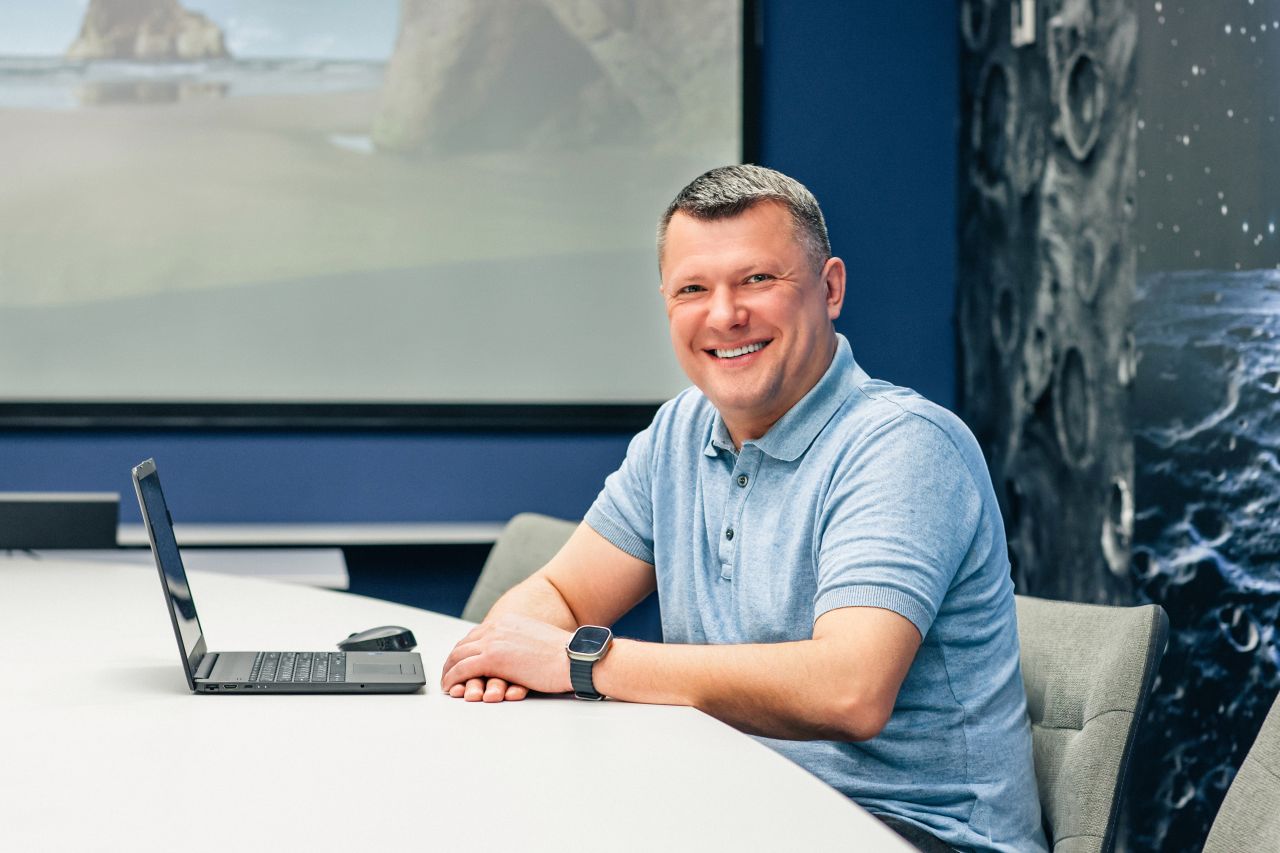
Serhiy Tsvetkov, Director of the Development and Construction Department of the VARUS Network
04.06.2026
Retail network development today is no longer just about opening new stores; it is a complex system of solutions where speed must be combined with efficiency, and scale with precision. Serhiy Tsvietkov, Director of the Development and Construction Department at VARUS, explains how the approach to developing the network is changing and where the focus will be directed in the coming years.
Key Objectives for VARUS
First and foremost, it is about accelerating and increasing the efficiency of the network's expansion. We are talking about the systemic scaling of VARUS with strict control over the investment efficiency of each new location.
To be specific, our key priorities include building a balanced portfolio of locations across different formats, reducing time-to-market, optimizing CAPEX without compromising quality, and standardizing approaches to design and construction.
At the same time, adapting store formats to shifting consumer behaviors is equally critical. Today, simply opening new doors is not enough—we must precisely meet customer expectations in each specific region.
VARUS is currently in an active phase of growth, which creates genuine opportunities for systemic changes.
My motivation lies in working with scale and influencing process transformation. The company already has a powerful foundation, and my task is to reinforce it through systemic organization, faster decision-making, and greater transparency.
Among our main goals are improving the controllability of investment projects, implementing best practices in retail network development, and synchronizing workflows between departments. Ultimately, this should deliver a more predictable and stable outcome for our expansion.
Defining Career Milestones
Throughout my career, I have worked with the full lifecycle of development—from scouting locations to launching stores—and this comprehensive experience is key.
From 2008 to 2018, I served as Director of the Development Department at LLC "TAS-Pharma" (TAS Group), and from 2018 to 2026, I held the position of Director of the Development and Administrative Affairs Office at LLC "THRASH" (Fozzy Group).
These roles provided the opportunity not only to open new sites but to construct a systemic, predictable model for network growth. This is exactly the approach I plan to scale at VARUS.
Developing VARUS Across a 1–3 Year Horizon
In short, it is about balancing pace and efficiency. Today's market is significantly more sensitive to mistakes than before, making the quality of decisions critically important.
Geographically, we are focusing on strengthening our positions in current regions while simultaneously preparing to expand into new target markets.
In terms of formats, we anticipate the active development of compact urban and regional stores, alongside more flexible solutions tailored to local demand and purchasing power.
When it comes to construction methods, the keys will be standardizing up to 70–80% of typical layouts, reducing time-to-market by 15–25%, and maintaining a sharp focus on energy efficiency. Today, it is not just important to build fast—it is vital to build in a way that ensures the asset remains efficient over the long term.
Plans for the Coming Months
The first 3–6 months are always about bringing order to the system and securing quick wins. We are starting with an audit and project prioritization—analyzing all active and potential locations to focus heavily on those with the best ROI. Some initiatives may be reviewed or temporarily paused.
Simultaneously, we are working to shorten implementation timelines by identifying bottlenecks and optimizing approvals and design workflows. The target is a 15–20% reduction in the current store-opening cycle.
Another key workstream is CAPEX control: reviewing budgeting processes, standardizing technical solutions, and driving down costs without sacrificing quality.
And, of course, it is critically important to enhance cross-functional collaboration—achieving speed is impossible without keeping teams synchronized.
Approach to Process Management
This is always a cross-functional story, and the key here is synchronization. My work is built on a clear structuring of processes—from the initial location search to the grand opening. This is managed through KPIs tied to deadlines, budget, and quality, as well as regular communication between the development, operations, finance, and commercial teams.
Analytics play a major role, as data allows us to make well-founded decisions regarding locations and formats. However, flexibility is just as vital. The market changes very rapidly, and the ability to adapt becomes a true competitive advantage.
Ultimately, my goal is to make the network's development process highly manageable, predictable, and scalable.